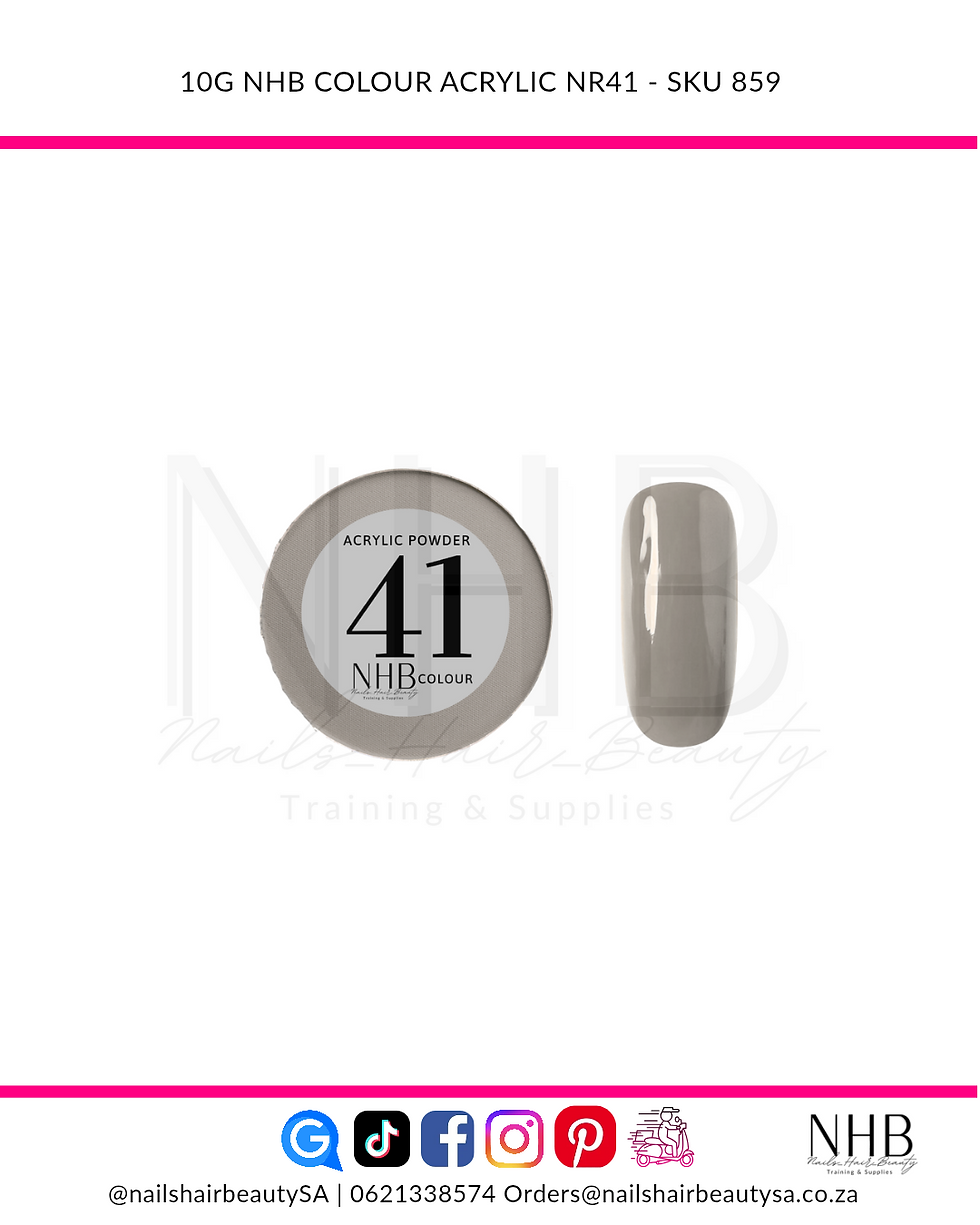
What the product is:
This is a finely‑milled coloured acrylic powder formulated for professional or home use in creating durable nail extensions, overlays or decorative enhancements.
The powder is mixed with an acrylic liquid (monomer) on a Dappen dish to form a buildable bead which is then applied to the natural nail or extension form.
Because it’s a “colour” acrylic powder, it comes pre‑pigmented rather than being clear—useful for full‑colour enhancements or creative nail art.
The 10 g size indicates a small jar or pot—suitable for technicians, nail art sets or home kits.
Benefits:
Using a coloured acrylic powder like this offers multiple advantages:
Vibrant, lasting colour: Since it’s pigmented acrylic, the colour is embedded in the enhancement rather than just being surface polish. This helps resist chipping or peeling of the colour layer.
Strong nail enhancement: Acrylic systems deliver high strength and durability compared to regular polish. They are ideal for extensions or overlays that need structural integrity.
Versatility for art & extensions: The colour powder can be used for full‑nail coverage, ombré effects, encapsulation, 3‑D nail art and layered effects.
Long wear: When properly applied and sealed, acrylic enhancements last longer than many polish systems.
Anti‑yellowing / stability: High quality powders include anti‑yellowing components and have excellent adhesion and shapeability. For example: “does not turn yellow nor discolor thanks to the anti‑yellowing ingredients”. Laloo
Ingredients:
Typical core ingredients include:
Polymethyl methacrylate (PMMA) or other acrylates copolymer: the base polymer beads used for acrylic nail powders.
Benzoyl peroxide: acts as the catalyst initiator in the powder that helps the monomer‑powder reaction to cure.
Pigments / colourants: e.g., iron oxides (CI 774xx), Titanium Dioxide (CI 77891), ultramarines etc, to give the powder its shade.
Anti‑yellowing/UV stabilisers: e.g., benzophenone‑1 or similar light stabilisers to maintain colour and clarity.
Optional additives: fine silica, flow agents, UV inhibitors, dust‑reducing or enhanced milling agents for smoother finish.
Important caution: the powder alone is inert, but when mixed with monomer it cures via chemical reaction. Safety depends on correct materials and mixing.
How to use it:
Here’s a step‑by‑step use guide for applying the colour acrylic powder for nails:
Prepare the natural nail
Remove any old product/polish, push back cuticles, lightly buff or roughen nail plate (e.g., 150/180 grit file) to aid adhesion.
Clean nail with lint‑free pad and pure acetone or 3in1 nail liquid.
Set up your acrylic mixture
Pour a suitable amount of acrylic liquid (monomer) into a Dappen dish.
With an acrylic brush, dip into monomer, then dab into the colour acrylic powder to form a “bead”.
The bead should have correct ratio of liquid to powder: smooth, workable, not too runny, not too dry.
Apply the colour acrylic bead
Place bead at the free edge or stress zone of the nail, then press and stroke towards the cuticle and sides to build extension or overlay. Maintain apex for strength.
Continue application until desired thickness, shape and coverage is achieved.
Cure / set
Allow the acrylic to polymerise (cure) fully—time depends on liquid speed, room conditions etc (often ~10 minutes for some systems) before filing. Laloo
Shape, buff & finish
File/shape the nail as desired (150/180 grit or finer).
Buff to smooth surface.
Clean off dust.
Apply a top coat or gel polish/sealant (non‑wipe top coat if desired) to protect and give shine.
Aftercare
Advise client or user to avoid using nails as tools, wear gloves for chores, apply cuticle oil regularly to maintain nail health and avoid dehydration.
What’s in the Box:
For a “10 g Colour Acrylic Powder” purchase you get:
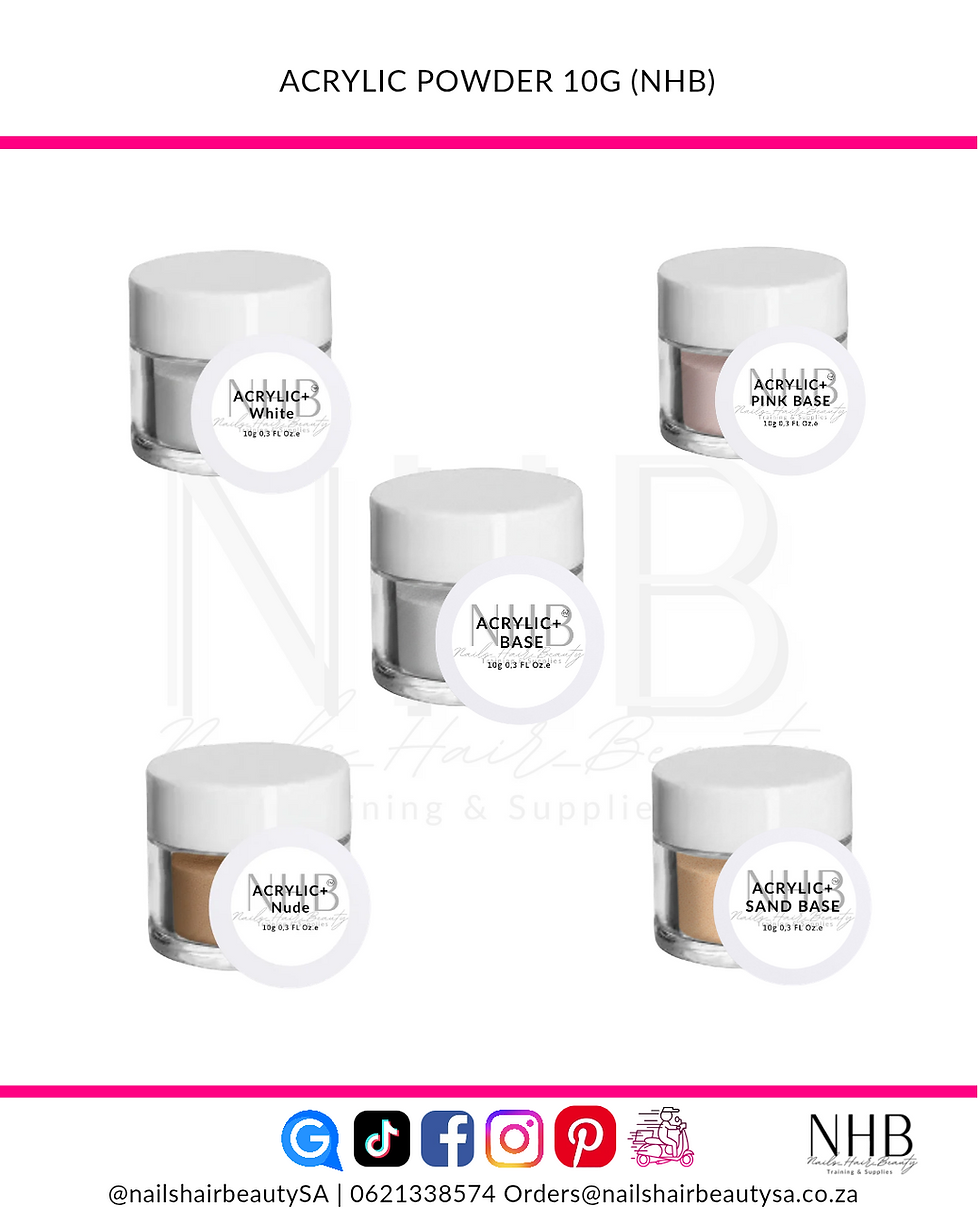
1 jar or pot containing the 10 g of the coloured acrylic powder.
Packaging include: jar with screw‑cap, labelled with product name/colour code/weight.
Safety warnings (keep powder dry, avoid inhalation dust, store sealed and away from direct sunlight).
Note: Monomer (liquid) is not typically included unless it is an acrylic kit; you will need to supply your compatible monomer (liquid).